
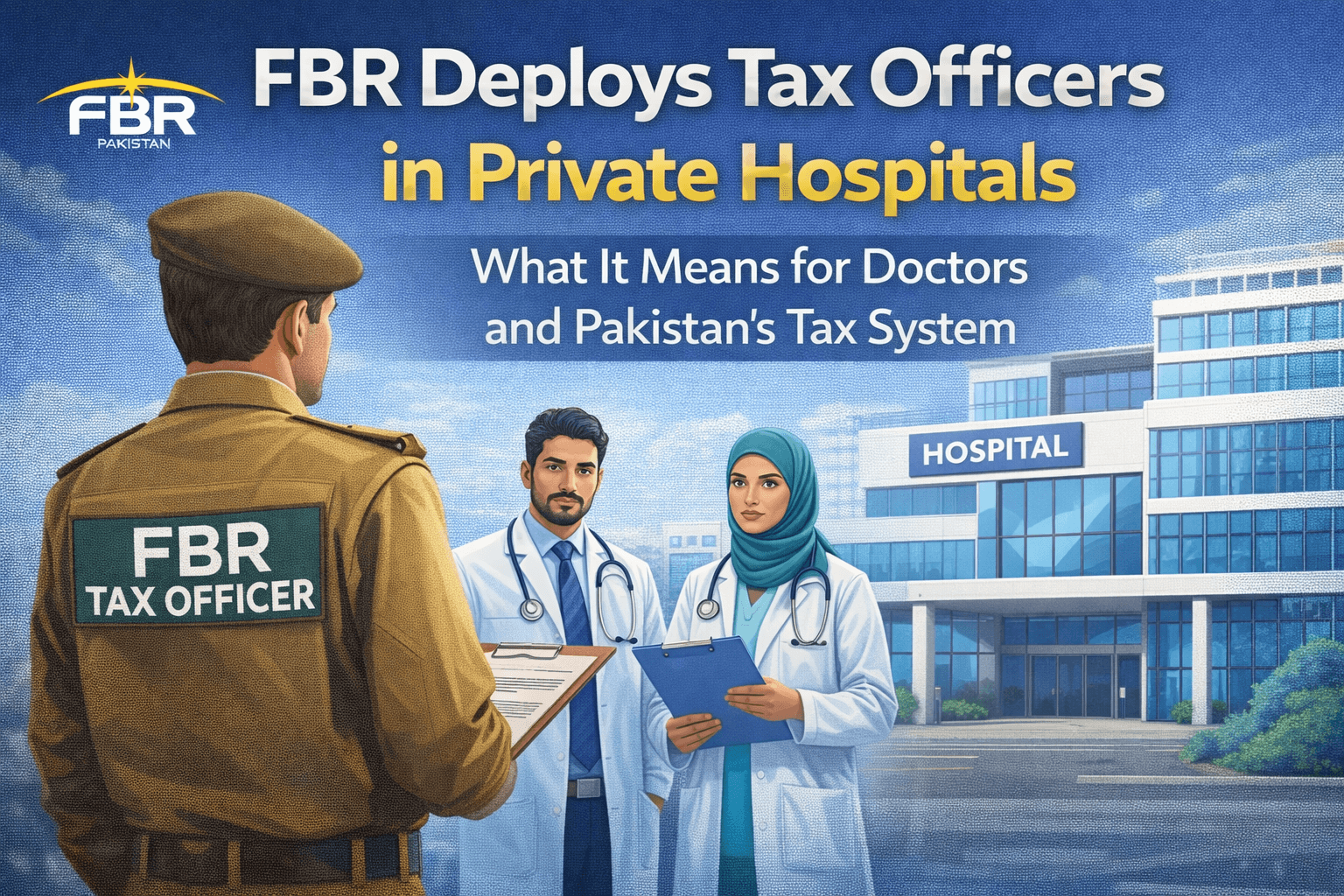
FBR Deploys Tax Officers in Private Hospitals: What It Means for Doctors and Pakistan’s Tax System
The Federal Board of Revenue (FBR) has placed tax officers in private hospitals to curb income underreporting by doctors and healthcare providers. This article explains the legal basis, economic impact, and how the initiative may help broaden Pakistan’s tax base and improve tax fairness.
FBR Deploys Tax Officers in Private Hospitals: Impact on Doctors and Tax System in Pakistan
The Federal Board of Revenue (FBR) has initiated a major tax enforcement drive by placing tax officers in private hospitals across Pakistan. The objective is to curb tax underreporting by doctors and private healthcare providers, a sector that has remained largely under-documented despite generating significant income.
This move is a key step toward broadening the tax base in Pakistan and ensuring fair tax compliance across all professions.
Why FBR Is Monitoring Private Hospitals
According to official data, Pakistan has more than 319,000 registered doctors, yet only about 130,000 doctors file income tax returns. Even among filers, many report unrealistically low or zero taxable income, which contradicts the revenue levels of private medical practice.
Private hospitals earn income from:
- Consultation fees
- Medical procedures and surgeries
- Diagnostic services
- Specialized treatments
The mismatch between earnings and declared income has made the healthcare sector a priority for tax enforcement reforms.
Is FBR’s Action Legal?
Yes. Monitoring income at source is already a recognized and lawful tax practice in Pakistan. Similar mechanisms exist in banking, real estate, and salaried employment sectors.
The presence of tax officers does not introduce new taxes. Instead, it ensures:
- Accurate income reporting
- Proper documentation
- Compliance with existing income tax laws
- Professional reputation or social status does not provide exemption from tax obligations.
How This Helps Pakistan’s Economy
When high-income sectors remain outside the tax net, the burden shifts to:
- Salaried employees
- Small businesses
- Registered taxpayers
This initiative promotes:
- Fair distribution of the tax burden
- Reduced reliance on indirect taxes
- Improved government revenue without raising tax rates
- Stronger economic stability
A documented economy benefits both taxpayers and the state.
A Step toward Broadening the Tax Base
If implemented successfully, this initiative could become a model for other under-taxed sectors, including:
- Retail and wholesale trade
- Real estate services
- Professional services
Broadening the tax base is essential for long-term fiscal sustainability and economic growth in Pakistan.
Transparency Is Critical for Success
For effective results, enforcement must be:
- Lawful and within legal limits
- Transparent and accountable
- Free from harassment and corruption
Without proper safeguards, public trust in tax reforms may weaken.
Final Verdict
The placement of tax officers in private hospitals is a necessary and overdue reform. Ensuring that all income earners contribute their lawful share is not punitive — it is essential for economic justice and tax fairness in Pakistan. A broader tax base leads to a stronger, fairer economy for everyone.